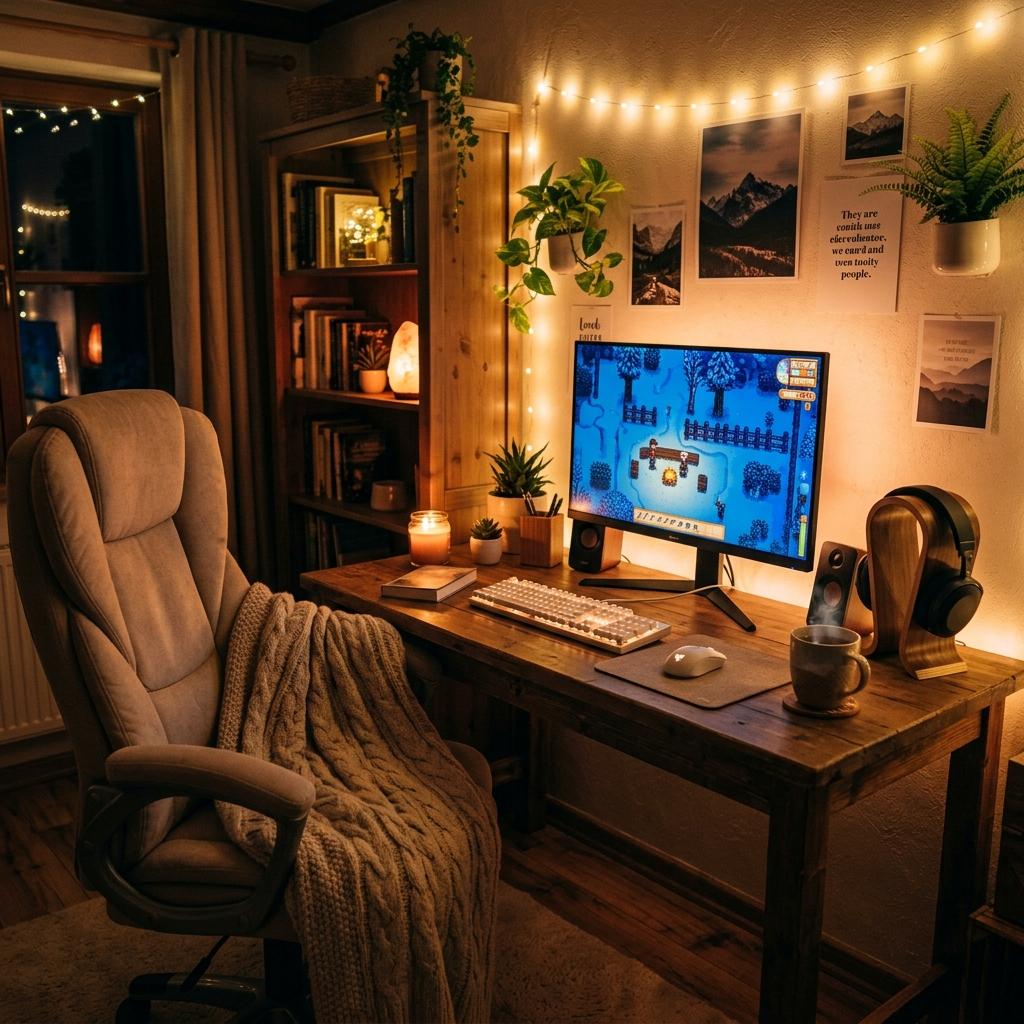
How to Make Gaming Feel More Relaxing
Easy ways to make gaming more relaxing, including game choice, setup comfort, lighting, boundaries, audio, and low-pressure routines.
Updated 2026-06-23
Gaming feels more relaxing when the game, room, sound, lighting, and expectations all support the same mood. A few small changes can turn a stressful session into something calmer and more comfortable.
Design the Session, Not Just the Room
Relaxing gaming is partly about the setup and partly about the rules you give yourself. A beautiful room can still feel tense if you are forcing ranked matches when you are exhausted, chasing dailies you do not enjoy, or leaving voice chat open when it ruins your mood. Before you play, decide what kind of session you want: comfort, story, progress, connection, or challenge. Then choose the game, lighting, sound, and session length around that goal. This keeps gaming from turning into another obligation and makes the hobby easier to return to with a good feeling.
1Choose games that match your energy
If you are tired, competitive games can feel more draining than fun. Cozy games, story modes, creative sandboxes, puzzles, and exploration games are better when you want to decompress.
2Lower the sensory load
Dim harsh lights, reduce game volume spikes, soften RGB brightness, and use headphones that do not squeeze your head. Comfort often starts with removing little irritations.
3Make breaks feel normal
Short breaks help your hands, eyes, back, and mood. Keep water nearby, stretch between quests or rounds, and stop before a game turns into obligation.
4Create a cozy start ritual
A lamp, a clean desk, a favorite playlist, a blanket, or a warm drink can signal that gaming time is meant to feel restorative, not rushed.
Relaxation Levers
Game Choice Changes Your Nervous System
Competitive queues, timers, ranked systems, and loud combat can be fun, but they keep your body alert. Cozy, creative, exploration, and story games give you more control over pace, which often makes the session feel more restorative.
Friction Shows Up as Stress
A chair that pinches, a headset that gets hot, a monitor that glares, or controls that feel awkward can make even a gentle game feel irritating. Relaxing gaming often starts with removing small physical annoyances.
Boundaries Make the Hobby Safer
Stopping after one quest, muting toxic chats, turning off dailies, or leaving a match queue before you get tilted are practical choices. Relaxation improves when you stop treating every session like a commitment.
Relaxing Session Checklist
Set the Room First
Lower harsh lights, adjust volume, clear the mouse area, and put water nearby before launching the game.
Pick a Low-Pressure Goal
Choose one quest, one decorating task, one chapter, or one cozy loop instead of an endless grind.
Use Comfort Settings
Turn on subtitles, reduce motion blur, adjust sensitivity, and lower effects that feel visually noisy.
Stop on a Good Note
End while you still feel satisfied so gaming stays associated with comfort instead of exhaustion.
Stress Traps to Avoid
Playing the Wrong Game for Your Mood
A game can be great and still be wrong for a tired night. Save intense games for higher-energy sessions.
Leaving Chat Unfiltered
Mute, block, or hide chat when it makes the session feel worse. You are allowed to protect the vibe.
Treating Breaks as Failure
Stretching, resting your eyes, or stopping early is part of keeping gaming enjoyable long-term.
Next Steps
Benefits of Gaming as a Hobby
How gaming can support relaxation, creativity, and connection.
Read Guide GamesBest Cozy Games for Nintendo Switch
Relaxing games for low-pressure evenings.
Read Guide Setup GuideCozy Gaming Setup Ideas
Build a room around comfort, warm lighting, and softer textures.
Read GuideFAQ
Key Takeaway
Relaxing gaming is intentional: choose the right game for your energy, make the room comfortable, and give yourself permission to stop when it stops feeling good.