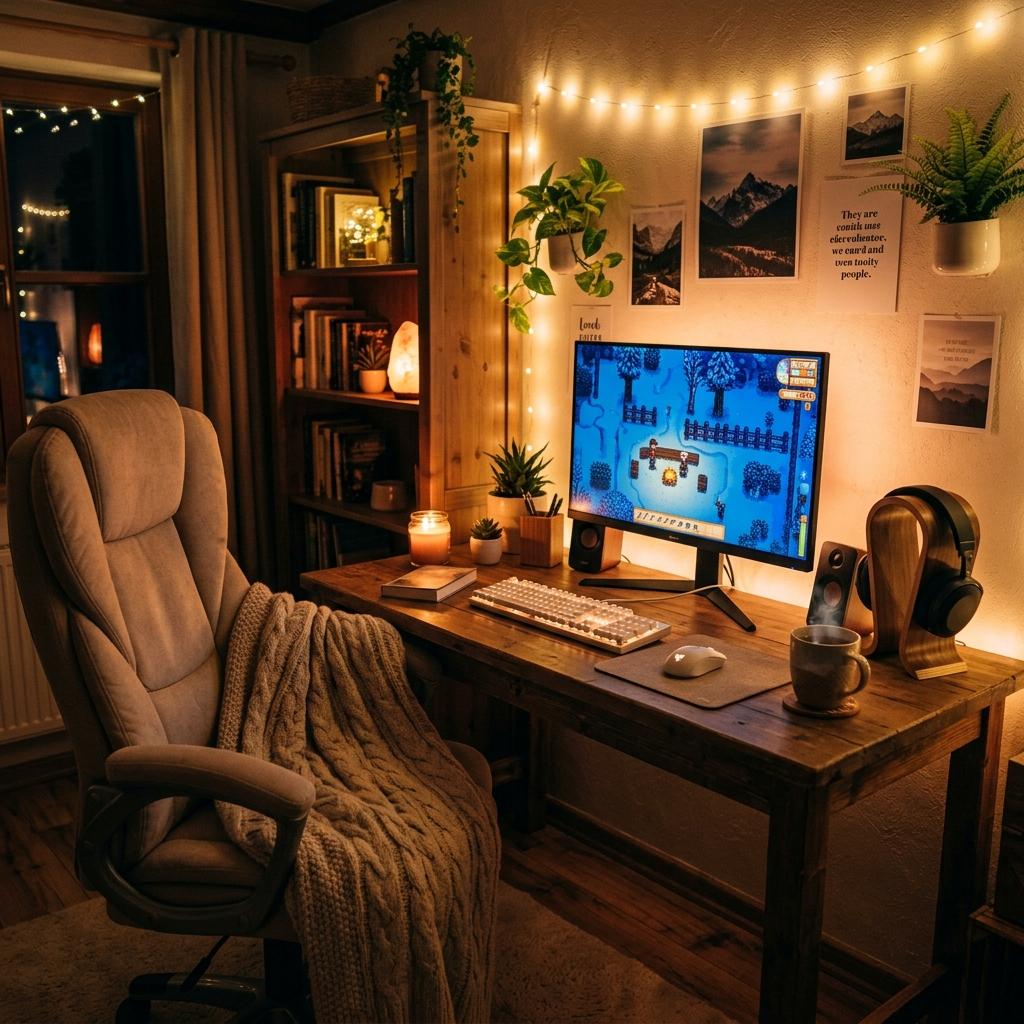
How to Choose a Gaming Setup Color Palette
Choose a cohesive gaming setup color palette using a neutral base, accent colors, undertones, lighting, repetition, and what you already own.
Updated 2026-08-11
A clear color palette can make an existing gaming space feel intentional without replacing everything in it. The easiest approach is to begin with the room you already have, choose a small number of repeating colors, and treat lighting as part of the palette.
1Identify the colors that cannot change
Start with the desk, walls, floor, screen borders, and any large furniture that will remain. These fixed colors form the base of the room, even when they were not part of your original aesthetic plan.
2Choose one main mood
Warm cream and blush can feel soft, lavender and silver can feel dreamy, while black with a bright pastel can feel dramatic. Pick words for the mood before choosing exact shades so every decision points in the same direction.
3Use a simple three-part palette
Choose a neutral base, one main accent, and a smaller contrast color. The exact ratio can vary, but letting the neutral take up the most space usually keeps the setup calm and gives the accent room to stand out.
4Check undertones and lighting
Two whites can look different when one is warm and the other is blue. View colors together in daytime and at night, then adjust screen wallpapers and ambient lighting so they support rather than fight the physical room.
5Repeat colors instead of filling every space
A color feels intentional when it appears in a few separated places. Leave some visual breathing room and repeat the accent near the desk, screen, and background instead of adding many unrelated decorations.
Next Steps
How to Make Your Gaming Setup Look Cute
Use visual repetition, focal points, and negative space.
Read Guide Beginner GuideCute Gaming Setup Tips for Beginners
Plan a first aesthetic using what is already on your desk.
Read Guide Cozy SetupWhat Is a Cozy Gaming Setup?
Understand how comfort, atmosphere, and color work together.
Read GuideFAQ
Key Takeaway
A cohesive palette comes from observing the room, choosing a mood, and repeating a few colors with restraint—not from replacing everything you already own.